Master Planning: The Invisible Architecture Behind Great Places
Before a skyline appears, before a facade is imagined, and long before interiors are designed — a project’s success is already determined.
Not by the building.
But by the plan around it.
Master planning is the quiet discipline that shapes how land behaves over time. It decides whether a development feels intuitive or confusing, lively or empty, luxurious or crowded. When done well, people rarely notice it — they simply feel comfortable.
Good architecture is seen.
Good master planning is experienced.
At Bowerbird Lab, our architectural approach begins at this foundational scale — which is why many clients searching for architects in Goa often discover that the quality of a project depends less on decoration and more on planning intelligence.
Designing Relationships, Not Just Plots
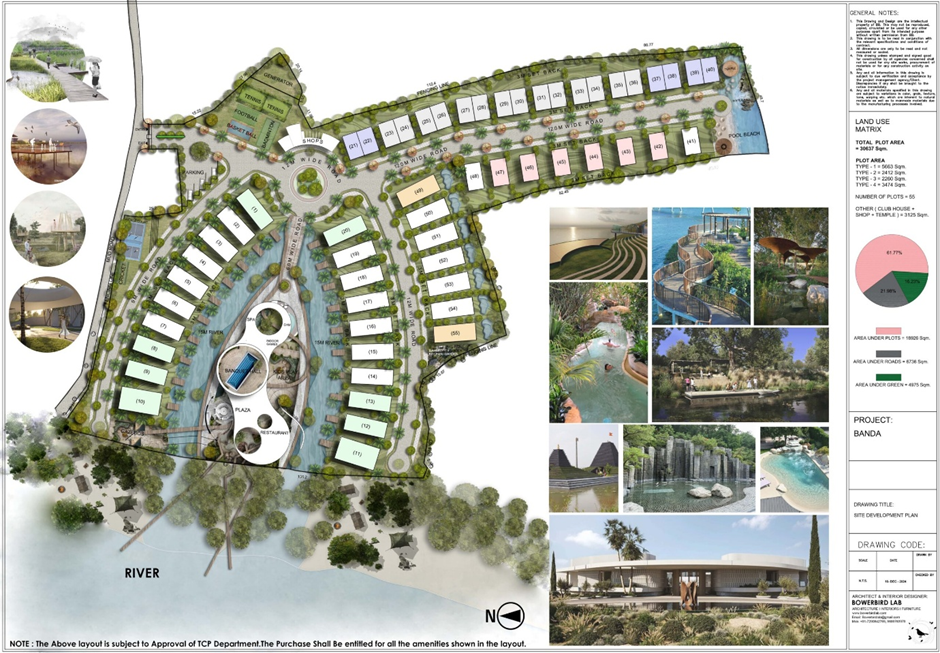
Most people assume master planning is about dividing land into parcels.
In reality, it is about designing relationships.
Relationships between:
- • Buildings and open spaces
• Public and private zones
• Vehicles and pedestrians
• Sunlight and shade
• Density and breathing room
A well-planned site allows these elements to coexist without conflict. You don’t think about where to walk — you naturally walk. You don’t search for amenities — you discover them. The environment guides behavior subconsciously.
This philosophy is increasingly shaping premium residential and hospitality developments across Goa, where clients today seek not just a structure but a lifestyle — one reason discerning clients look for the best architects in Goa rather than only construction services.
Movement is the First Building
People do not experience architecture statically — they experience it in motion.
Master planning therefore begins with circulation. Not just roads, but sequences:
Arrival → Transition → Pause → Destination
Entry points prepare the mind.
Pathways create anticipation.
Courtyards become orientation anchors.
When movement is intuitive, the place feels larger, calmer, and more premium without increasing built area.
Many successful villa communities designed by leading Goa architects achieve luxury not through excess materials, but through the choreography of arrival and spatial flow.
Density Without Discomfort
Modern projects demand efficiency. Land value must be optimized, yet buyers expect openness.
Master planning resolves this contradiction through spatial strategy:
- •Offsetting buildings instead of aligning them
• Creating visual corridors instead of leftover gaps
• Layering greens between structures
• Varying heights to avoid monotony
Two developments with identical unit counts can feel completely different — one congested, one expansive.
This difference often defines the work of top architectural firms. Clients searching for the top architects in Goa typically notice that premium developments feel spacious regardless of size, simply because the planning was done correctly from the beginning.
Landscape as Structure
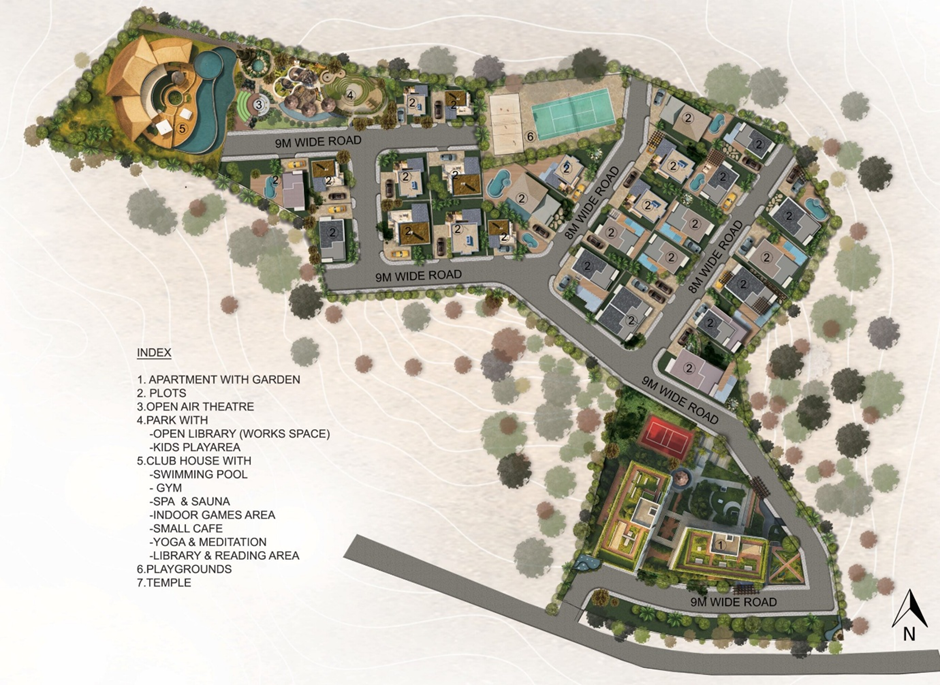
Landscape is often treated as decoration added after architecture. In reality, it is one of the strongest planning tools available.
Trees control temperature.
Open spaces control density perception.
Water bodies influence microclimate.
Green buffers reduce noise.
When landscape is planned early, infrastructure becomes lighter and comfort becomes natural. Instead of mechanical dependence, the site itself provides environmental moderation — a principle widely adopted in contemporary tropical architecture across Goa.
Why Master Planning Visualization Matters
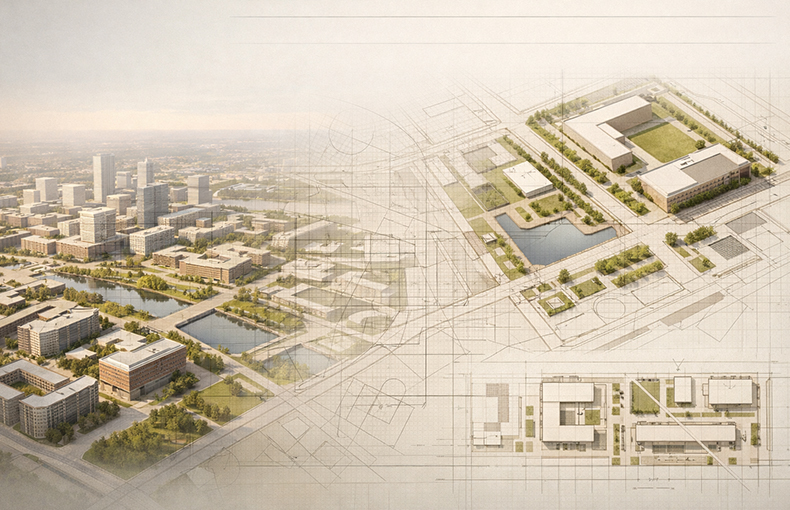
A master plan is complex. Lines on drawings rarely communicate spatial experience to clients or buyers.
Visualization translates technical strategy into emotional understanding.
Through rendered aerials, eye-level perspectives, and atmospheric scenes, stakeholders can perceive scale, distance, and comfort. Decisions become faster because uncertainty disappears.
For developers and homeowners exploring architectural firms in Goa, visualization has become a decisive factor — it allows them to understand not just what will be built, but how it will feel to live there.
The Long-Term Value
Buildings age physically.
Master plans age socially.
A well-designed layout continues to function as families grow, technology changes, and phases expand. Poorly planned projects require constant correction — additional signage, traffic control, privacy solutions, and expensive retrofits.
Planning is the cheapest stage to solve the most expensive problems.
The Bowerbird Lab Approach
At Bowerbird Lab, we treat master planning as future memory design.
Instead of asking, “How will it look on completion day?”
We ask, “How will it feel after ten years of living?”
Our work across residential, hospitality, and villa developments reflects a simple belief — architecture should guide life effortlessly. This long-term thinking is why many clients looking for the best architects in Goa approach us not only for buildings, but for complete spatial strategy.
Architecture creates structures.
Master planning creates belonging.
Great places are never accidental.
They are organized long before they are built.